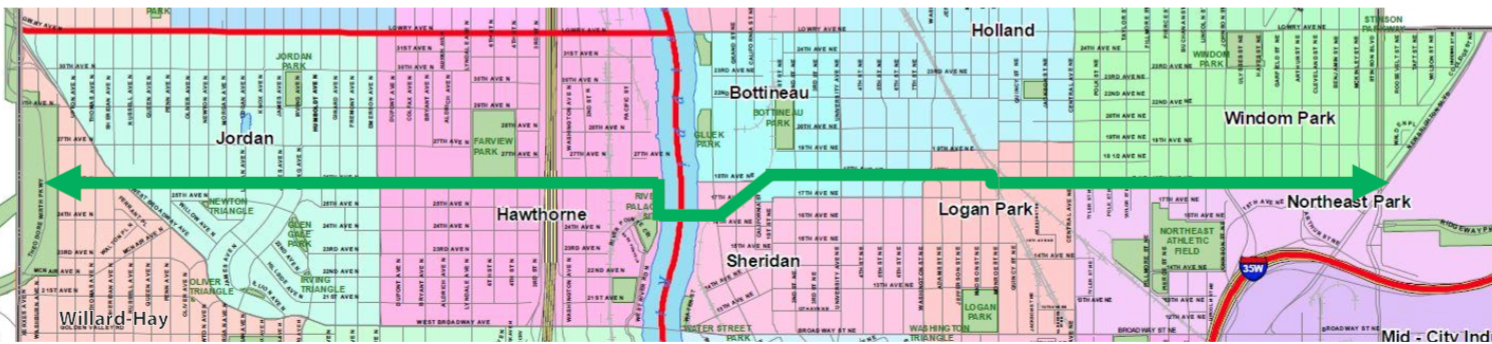
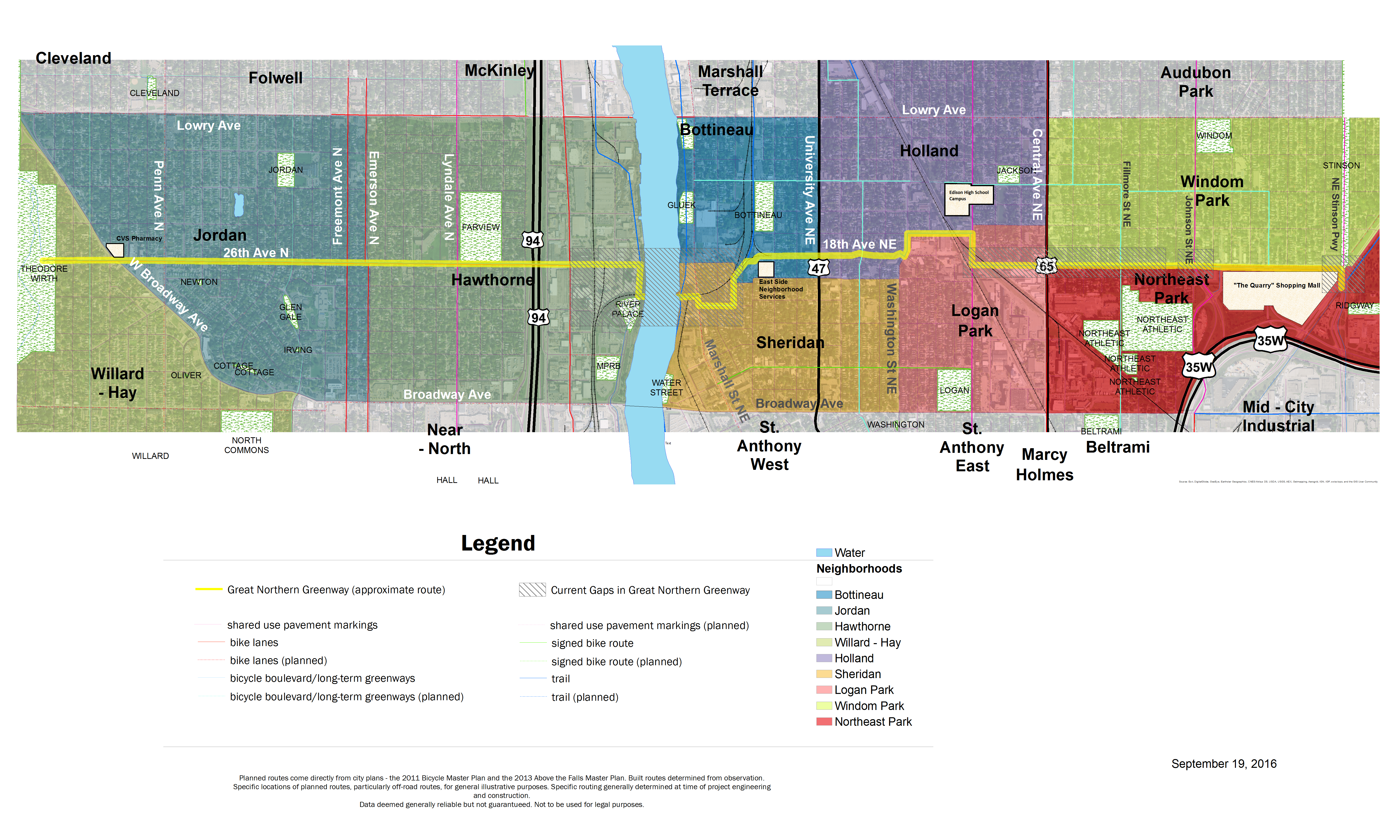
To get a closer look at the Great Northern Greenway’s route through North and Northeast Minneapolis, click on the first image below. To view details about progress on the 18th Ave bike path in Northeast Minneapolis, click on the second image below.
Hello Commissioners, City staff and Minneapolis residents,
My name is Amanda Winterer and I represent the Bottineau Neighborhood Association. I am the group’s treasurer. Thank you for this opportunity to make this statement. Bottineau Neighborhood Association requests that the funding structure and levels of funding remain the same for all neighborhood groups for the foreseeable future. The Citizen Participation Program has worked well for the past 8 years.
For example, Bottineau has established Neighborhood Priority Plans. One such NPP is the Homework Helper at Bottineau Park. After a few Somali parents asked for this help, at a community meeting, our neighborhood group got busy and set up the coordination of volunteer tutors to help all children get STEM help at our park. Another NPP implemented is Crime Solutions that works with the police to track crime trends and react with organized volunteers when shots are fired in the community or other crimes are committed. We have many examples of this type of outreach conducted at community request.
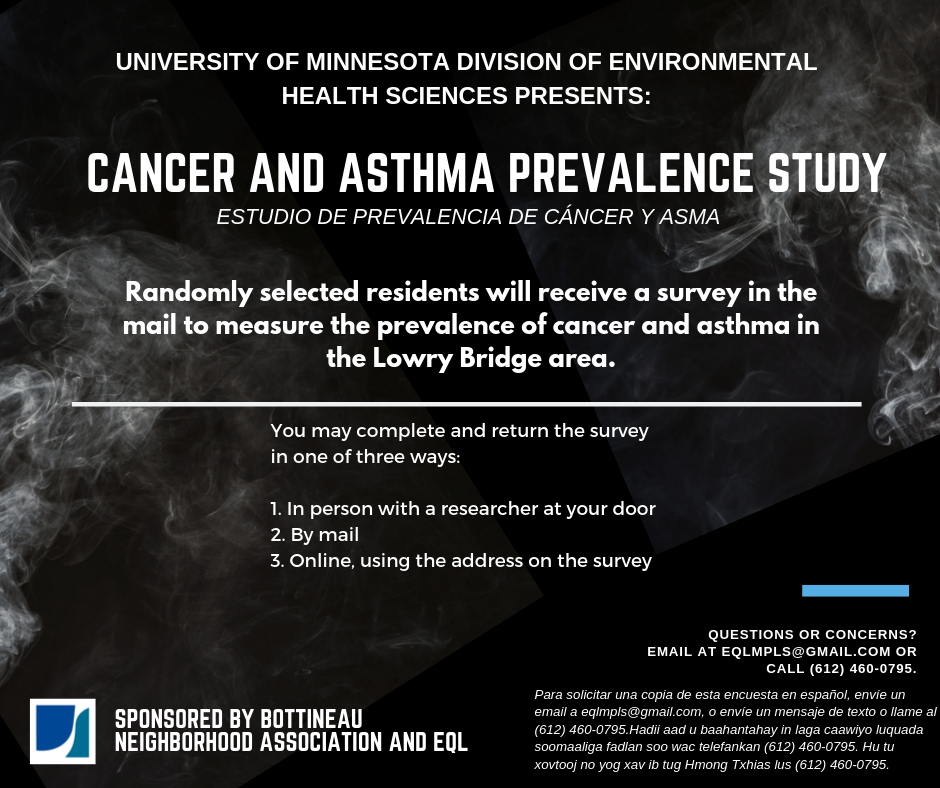
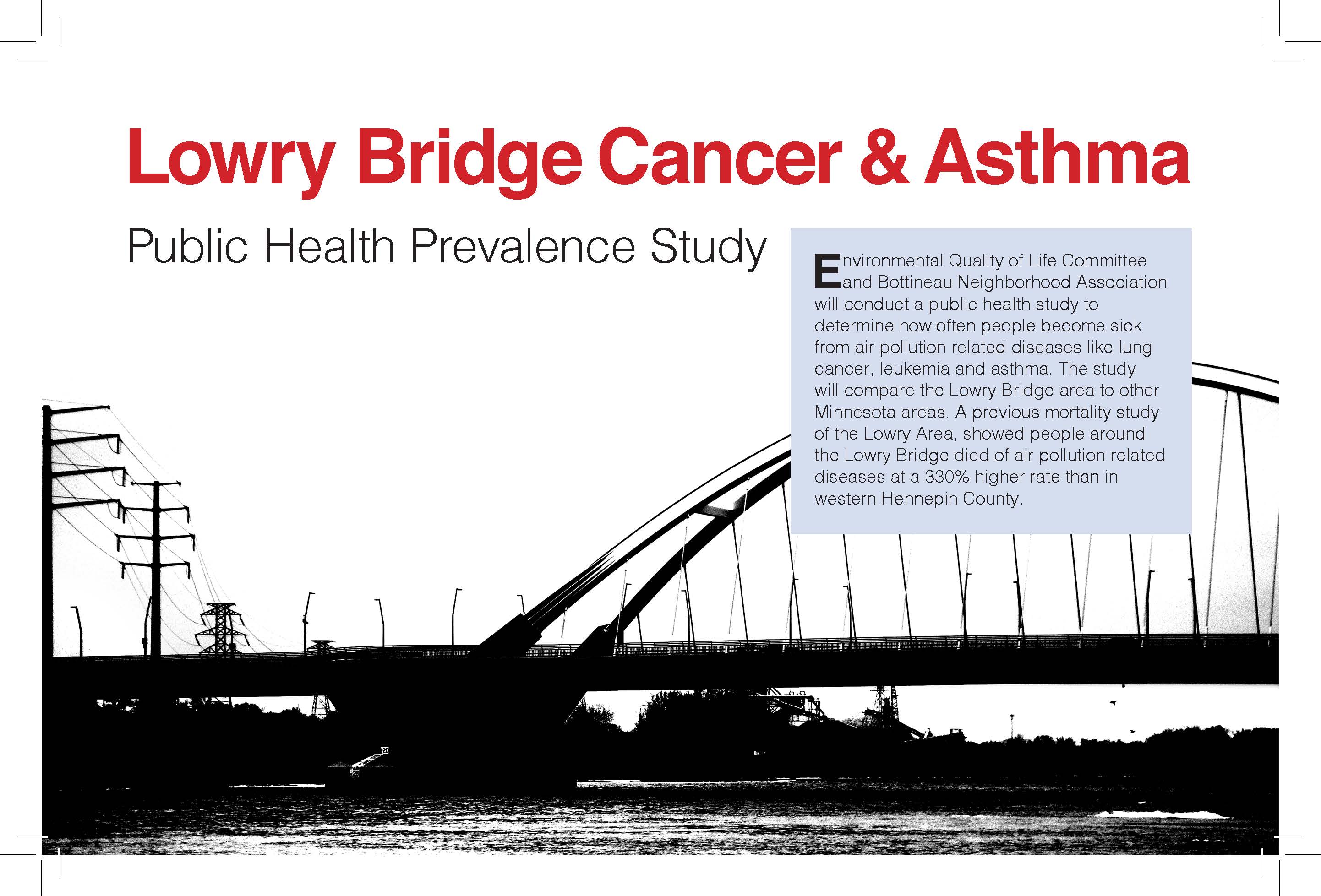
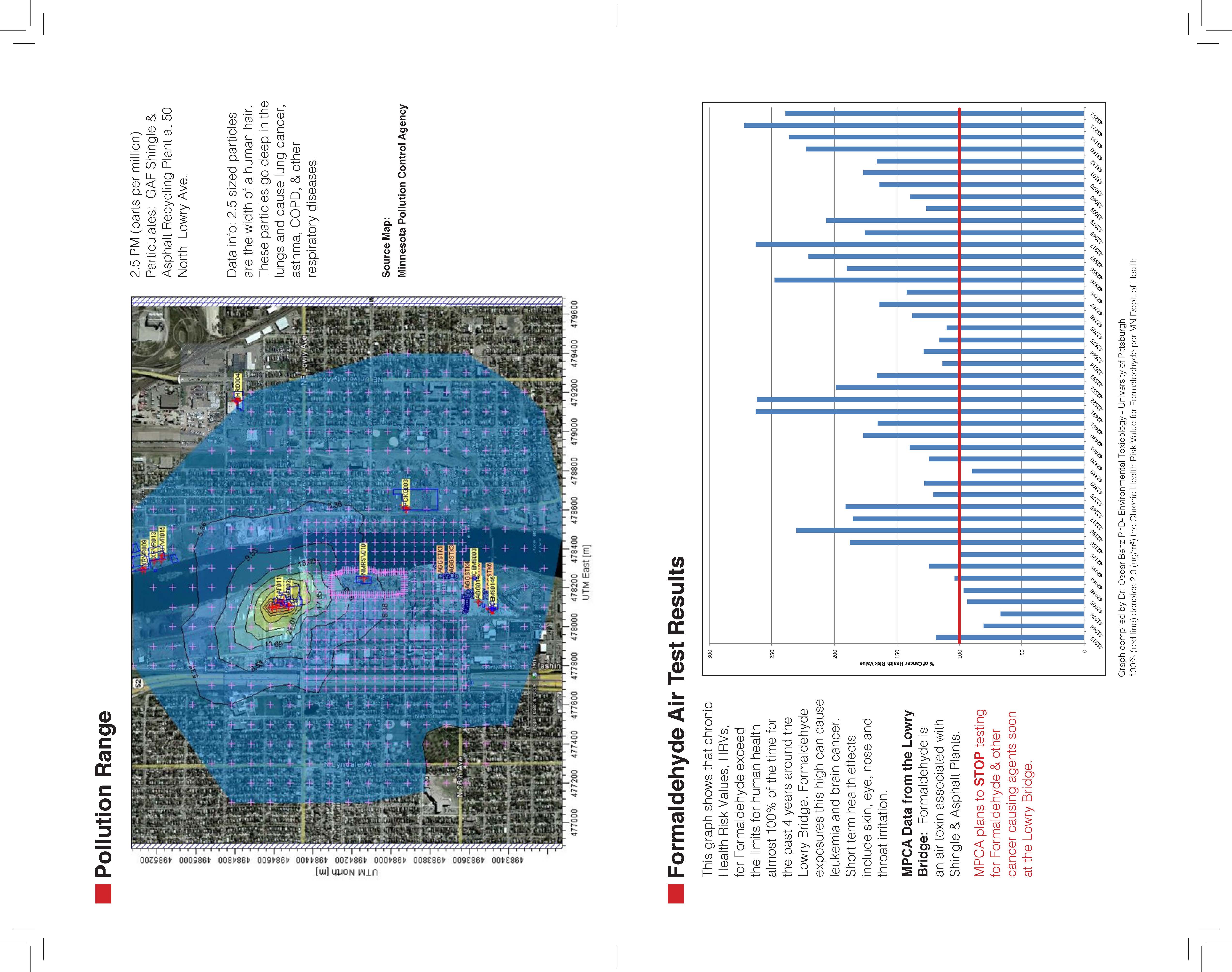
BNA also requests that the Community Innovation Funds, CIF, be expanded and used more. BNA was a recipient of one such CIF grant and put it to use studying air pollution around the Lowry Bridge that leveraged an additional 500,000 dollars in MPCA air monitoring that is currently being conducted on the Mississippi Water Management Organization roof top near Lowry Bridge.
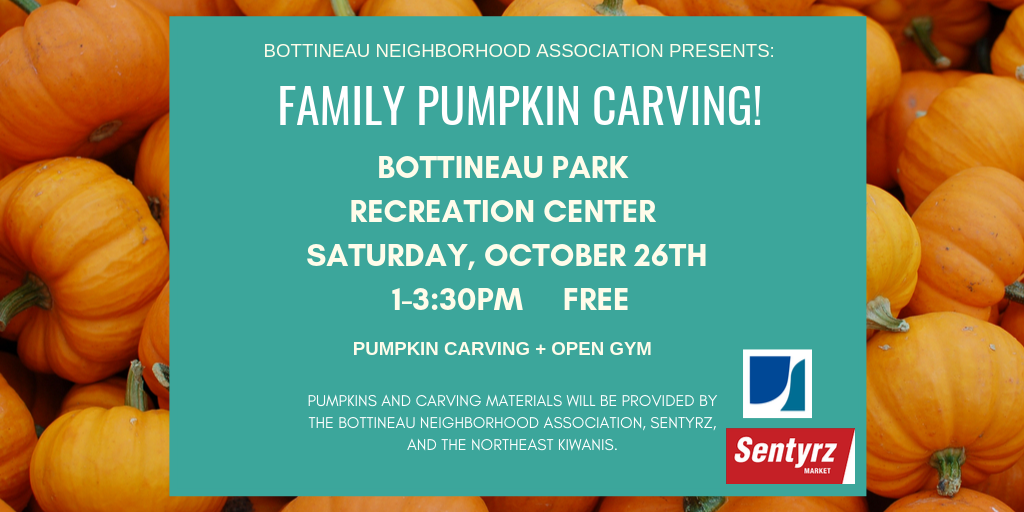
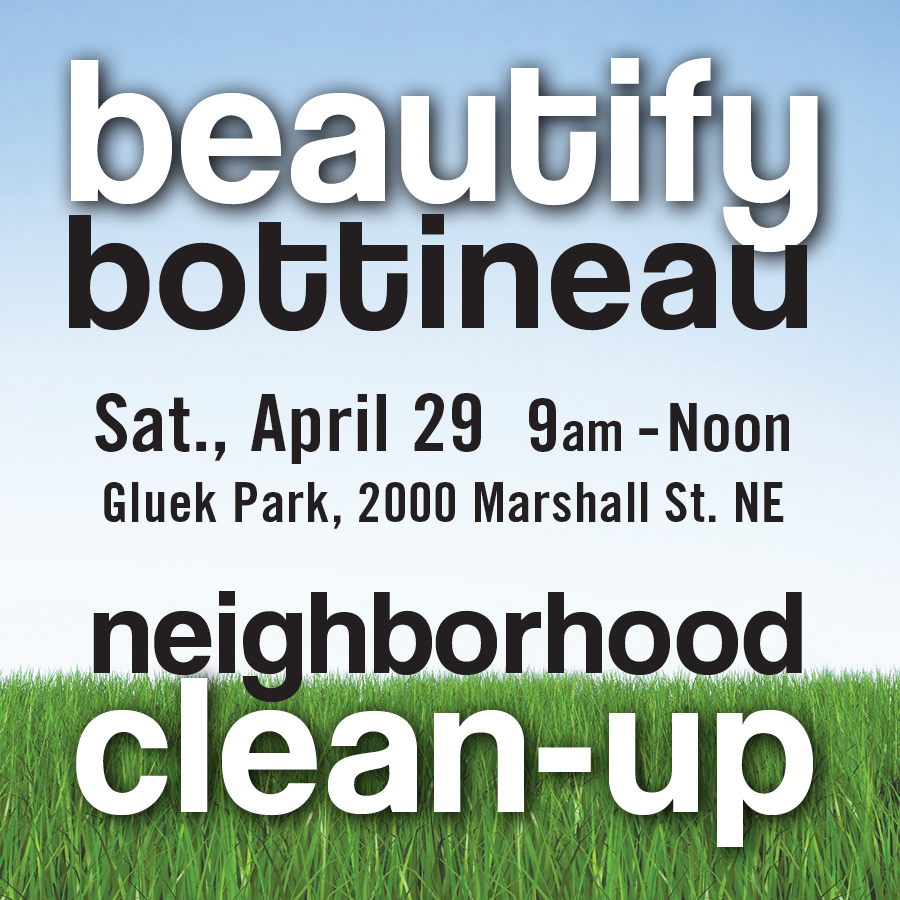
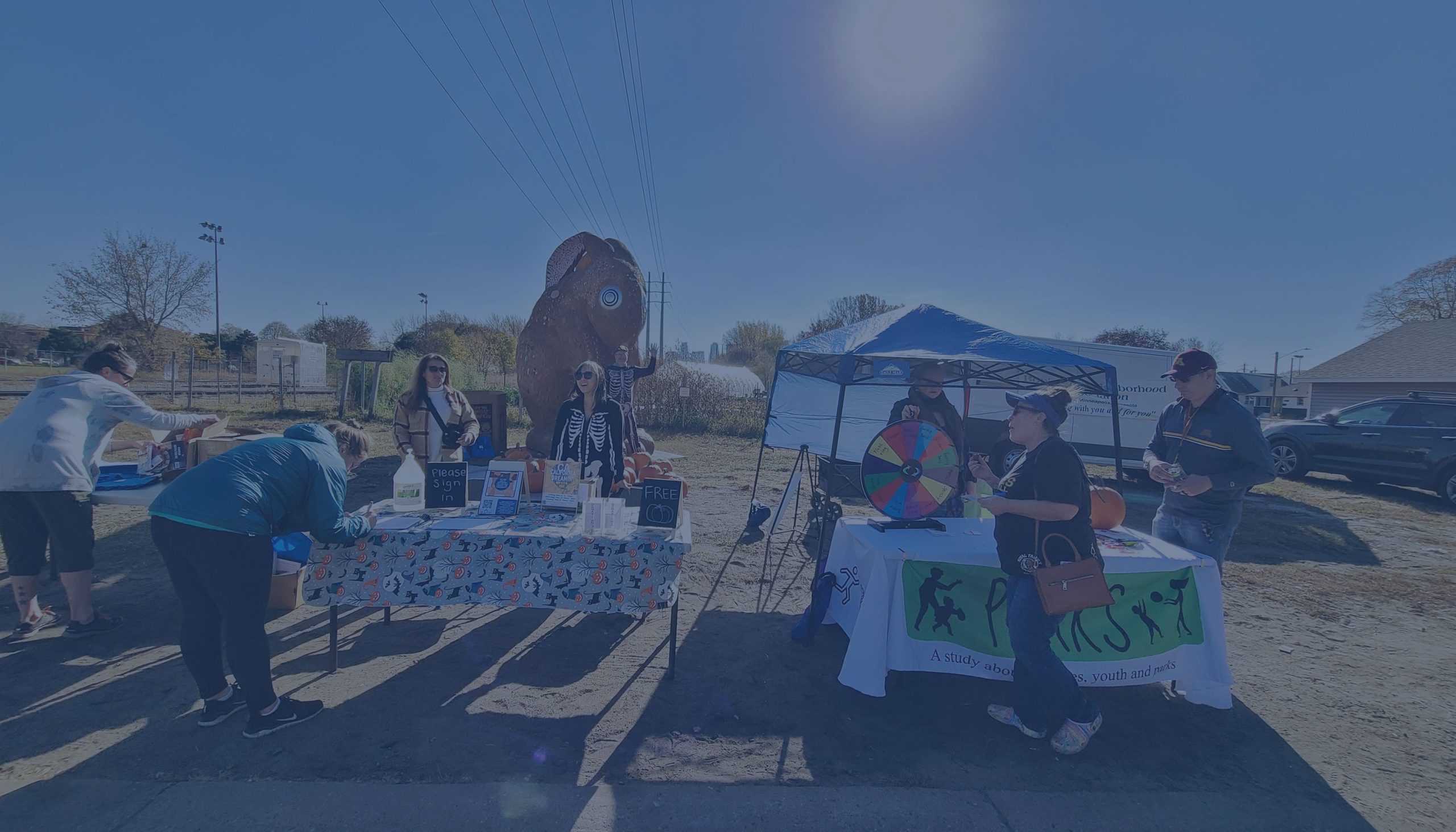
As a matter of neighborhood tradition, a pumpkin carving is held at the Park every fall and a Bottineau Neighborhood and Mississippi River clean-up is held every April in honor of Earth Day. This year, as part of the Green Zones in Minneapolis, we will be able to offer 25 free trees to the community to help remediate air pollution and improve the tree canopy in Bottineau.
Thanks again for listening to our request. Copies of this testimony are at the sign in table.
Presentation developed and presented by Amanda Winterer at Bottineau Neighborhood Association’s January 2017 Community Meeting. You may either view the slideshow below or, if preferred, a pdf of this presentation can be viewed here —> Northeast Housing Update 2016
[slideshow_deploy id=’985′]
United Against Islamophobia Panel
November 2, 6:30 pm. to 8:00 p.m.
Our Saviour’s Lutheran Church: 2315 Chicago Ave., Minneapolis
Islamophobia is increasingly rising to the front of national attention. Establishing trust and building relationships among people of different faiths and cultures is a priority for Minneapolis Council Members Warsame and Frey. In a time when Islam is the subject of much discussion and controversy, Warsame and Frey hope to enable an ongoing open dialogue, in a safe environment for debate, and promote a more informed understanding of Muslim culture. They want to extend an invitation to all community members to attend to this panel on November 02 at 6:30 pm at the Our Saviour’s Lutheran Church.
As an American who is a Muslim, black and an immigrant, Anti-Muslim and anti-immigrant bigotry undermines the values I strive to live out every day: the American values. It is important to talk about Islamophobia and raise our voices to increase awareness and education. It is my hope that leaders and community members work together to promote inclusion and respect for one another
– Abdi WarsameAs a Jewish man, I love my Muslim sisters and brothers. Now more than ever, appreciation and celebration of our differences must be paramount, and this forum provides a grand opportunity
– Jacob Frey
Confirmed speakers include:
The Honorable Judge LaJune Lange (Ret.)
Lange is a senior fellow with the Roy Wilkins Center for Human Relations and Social Justice. A retired State of Minnesota trial court judge, Lange is an expert on legal and constitutional standards for discrimination in state and federal courts.
Pastor Laurie Eaton
Pastor Eaton was called as pastor to Our Saviour’s Lutheran Church in Minneapolis in 2009. She is an active leader in ISAIAH, a coalition of approximately 100 congregations committed to living out faith values in the public realm, seeking racial and economic equity in our state.
Imam Asad Zaman
Imam Asad Zaman is a distinguished leader in the education and non-profit sectors. He is the Executive Director of the Muslim American Society of Minnesota and a frequent speaker at Islamic conferences and Islam Awareness Weeks.
This event is free and open to the public. Light refreshments will be served. Please rsvp to [email protected]
Taste of Northeast
The deadline for vendors has been extended beyond Sept 1st for the Taste of Northeast Marketplace, which will take place on Saturday, September 24, 2016.
The Marketplace will be located outside of the parish center in the parking lot from 11:00 am – 6:00 pm at Saint Mary’s Orthodox Cathedral (1701 – 5th Street NE MPLS 55413). Click here for more details
A Common Thread 2017
A Common Thread annually showcases the exceptional work of Textile Center members. This non-juried exhibition gives every Textile Center member an opportunity to exhibit their recent work in Textile Center galleries. For more info, click on the following link:
http://www.textilecentermn.org/a-common-thread-2017-deadline-november-18/
.
Deadline: Friday, November 18th, 2016 at 5pm
Call for Art – Inspired by Nature
This is an open call for submissions of 2-D and 3-D artworks to create a web-based art donation program for works that will become part of the permanent collection at the Minnesota Veterans Home – Minneapolis (MVH-Mpls). This call is open to artists in Minnesota, or artists with Minnesota roots that work in any and all visual 2-D or 3-D media. Applications can be sent via email or USPS and must be timestamped no later than midnight September 15, 2016. Click on the following link for more information:
http://goddessofglass.com/call-for-art/
Art-in-Ed Artist’s Book Residency Grant
The Art-in-Education Artist’s Book Grant is an eight- to ten-week residency awarded to two emerging artists to create a new artist’s book and teach young people. Postmark Deadline: November 15, 2016. Click here for more details.

Dr. El-Sawaf is a local psychoanalyst, University of Minnesota professor and Imam at Masjid Al-Iman Islamic community center in Sheridan Neighborhood. Jaylani Hussein is executive director of the Council on American Islamic Relations-Minnesota (CAIR-MN).
At the forum, Dr. El-Sawaf presented a short primer on Islam, followed by a 60 minute question and answer session. Below is a transcript of the Q&A session:
Q 1: If the Koran gives clear instructions, [how is it] that so many people can distort those teachings, i.e. why do you think young people–even in our community–become radicalized?
A1: Many profess to be believers in Islam yet but they fail to act upon the actual teaching of Islam. A2: Youth are especially susceptible to predators. For instance, there are sexual predators that target youth, there are religious predators as well, and they exploit youth and deceive them.
Q 2: How does one acquire the book (Qur’an) with English translation?
A1: CAIR has English translations to order for free on their website called “Share the Qur’an campaign” but you must pay shipping and handling. A2: A copy of the Qur’an in English was given to the Bottineau Neighborhood with the advice that the Qur’an is poetry written in Arabic and the meanings are somewhat lost or distorted in English just like French poetry when translated into English loses some of the meaning.
Q 3: Why do some (Muslim) people not shake hands?
A1: Some scholars teach that it is totally forbidden to touch hands. Muslims will put their hand to their chest to indicate that handshakes are not allowed. Also eye contact in the Muslim culture can be offensive so if a Muslim person is not making eye contact that does not mean they are not listening or being disrespectful. Eye contact varies from culture to culture. A2: Let the Muslim lead the introduction exchange and you will know if a handshake is welcome.
Q 4: What is the best way to show support and camaraderie, say hello to neighbors who are still strangers to us?
A1: The Minnesota Council of Churches has a sign for people to order that says: “To Our Muslim Neighbors BLESSED RAMADAN blessedramadan.org” A2: Also you can order a sign from CAIR that says: “We Stand with our Muslim Neighbors.”
Q 5: Do you have any ideas about how to reach out to the Somali community in our neighborhood and work together with them to improve our community?
A1: This is a newer community to Minneapolis and more transient. Most of the households are woman led. It is an oral society so you need to have conversations as written material will be ignored. Go to the Halal store on 19th and University Ave NE and stand outside and make contact with the women who go in and out of the store. See if you can find a younger woman to bridge your contacts with the older women; that would be best. [Note: This has already been done by Bottineau volunteers and staff, resulting in a long list of phone numbers of many women in the Somali community. Many volunteers have worked with Somali youth in a reading program. For the past 2 years, there has been a co-sponsored National Night Out block party with the women and their children.]
Q 6: Why do they not have pets/touch dogs?
A1: In Somalia, when a dog runs at you it means it is rabid so there is great fear of dogs that run up to a person. In the U.S. dogs run up to people and are not rabid but the reaction is the same. Some Somali families owned dogs in Somalia; dogs were kept outside of the home and dogs are not allowed to lick people in Somalia. [One of the speakers shared a story of a family dog in Somali protecting him as a toddler.]
Q 7: Is it disrespectful to say “salaam alleykum” (Peace of God be with you) or is that a religious sentiment only?
A1: Anytime you greet someone in their own language they will be happy. It would be wonderful.
Q 8: I am having my Somali neighbors over for dinner. What should I serve?
A1: No pork or pork products.
Q 8A: How about milk and cheese.
A2: Yes, definitely those are good things to serve.
Q 8B: Does it have to be Halal meat.
A3: It depends on the individual. Some are very strict and the meat should come from a Halal grocery but others are fine with a regular grocery store product.
Q 9: Why do young girls wear headscarves?
A1: When a girl reaches puberty she is telling men, “I am not for everyone, I am for the one who will pick me out of the millions of women.” It is an honor to wear the scarf. It is beautiful to show this modesty and respect. But not only the scarf is worn; the whole body is required to be dressed modestly. Muslim cultures around the world have differing definitions of “modest dress” but tight jeans with a head scarf are not modest. The term for this scarf and dress is Hajib.
Q 10: How can we help the (Muslim) community move from renters to homeowners?
A1: Islam does not allow interest to be charged on loans as all interest is considered usury. Some scholars in Islamic law have determined it is okay to use U.S. banks to buy a house as long as the Muslim owns the house, not the bank, and therefore monthly payments can be made. It costs more to make this arrangement than a conventional loan non-Muslims can use. There is also an Islamic Finance group in Europe that will finance houses for Muslims in the U.S. This group does not break Islamic law.